
How Doctors Rate a Child’s Pain After an Accident
If your child, whether a toddler or a teenager, was hurt in a car accident, a fall, or any other incident, they may not communicate pain the way an adult would expect. Pediatric providers use different tools depending on your child's age, and understanding them, along with what changes once your child becomes a teenager, helps you support accurate documentation, which matters just as much for a child's injury claim as it does for an adult's.
The Tools Providers Use, by Age
FLACC Scale (infants and toddlers, roughly 2 months to 7 years, or any child too young to self-report). This isn't something the child answers, it's a behavioral scale the provider fills out based on five observations: Face, Legs, Activity, Cry, and Consolability. Each is scored 0 to 2, for a total range of 0 to 10. If your toddler is grimacing, drawing their legs up, restless, crying, and hard to soothe, that adds up to a high score even though your child never said a word.
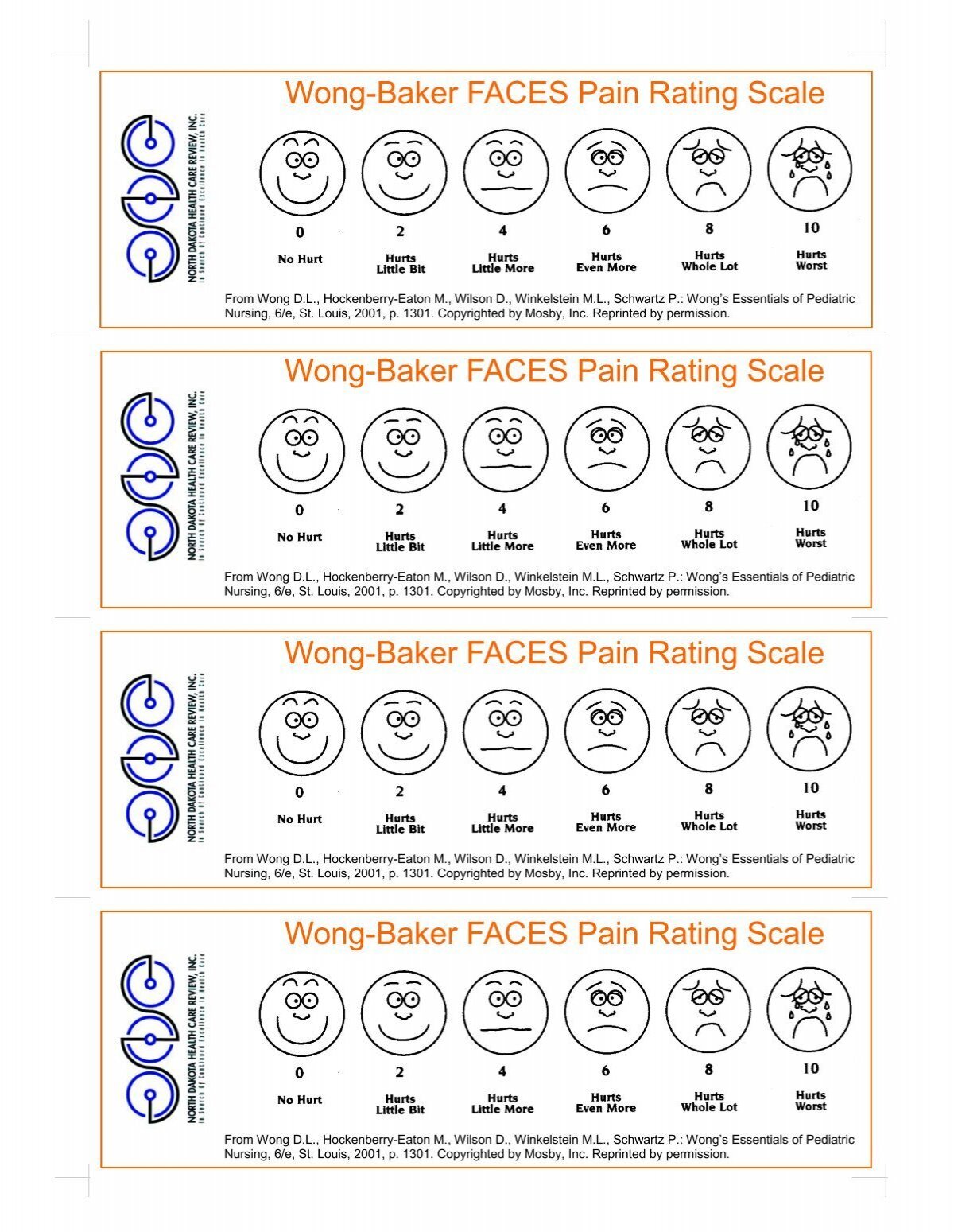
Wong-Baker FACES Scale (roughly age 3 and up). This is the six-face chart most parents have seen in a pediatrician's office, ranging from a smiling "no hurt" face at 0 to a crying "hurts worst" face at 10, in increments of two. Your child points to or picks the face that matches how they feel. It requires no reading or counting ability, which is why it's used well below the age most children could meaningfully use a numeric scale.
Numeric scale (roughly age 9 and up). Once a child is old enough to reliably use numbers the way an adult would, most providers transition to the standard 0-10 numeric scale.
What's Different for Teenagers
Once your child is old enough to use the standard numeric scale, roughly age 9 and up, they're self-reporting the same way an adult does, and the advice for adults applies directly: be specific, be consistent, and explain any real change rather than leaving it unexplained.
But two things are worth watching for specifically with teenagers.
They tend to underreport, not exaggerate. Self-consciousness about seeming weak or dramatic, especially in front of a parent or a doctor they don't know well, can lead a teenager to give a lower number than what they're actually experiencing. If your teen is moving carefully, skipping activities, or seems more tired or irritable than usual at home, and that doesn't match what they told the doctor, it's worth gently checking in before the next visit rather than assuming the medical record already reflects reality.
Their own social media becomes part of the case. The same surveillance and social-media review that applies to adult claimants applies to a teenage claimant too. If your teen is reporting significant pain but posting videos of themselves dancing, playing sports, or otherwise looking fine, that discrepancy gets used exactly the way it would for an adult, regardless of whether the post is old, staged for a caption, or doesn't reflect how they actually felt that day. It's worth having a direct conversation with your teen about this while the claim is active.
Why This Matters for a Child's Claim
Because young children can't articulate pain the way an adult can, their medical record often relies more heavily on the provider's own observations than on the child's self-report. That makes it especially important for parents to describe, in detail, what they're seeing at home: sleep disruption, appetite changes, favoring a limb, regression in behavior, or reluctance to do things the child used to enjoy.
Those parental observations often end up filling the same evidentiary role that a detailed pain description fills for an adult claimant. Just as with an adult's claim, consistency matters: if your child's reported or observed pain changes significantly between visits, it helps to note what changed (a new activity, a growth spurt, a specific incident) rather than leaving the swing unexplained.
Get Help With Your Child's Injury Claim
A child's pain and recovery timeline can be harder to document than an adult's, precisely because so much of the record depends on what parents and providers observe rather than what the child says. Hagen Rosskopf has represented injured Georgia families for more than 30 years and, as your child's personal injury attorney, can help make sure your child's medical records support the compensation and settlement your family is entitled to.
Call 404-522-7553 for a free consultation. There's no fee unless we win your case.