
A Four-Year Fight Against Two Government Entities Over One Sunken Utility Cover
Quick answer: A cyclist crashed on North Avondale Road (GA 233) in Avondale Estates after his bike struck a hole surrounding a water valve access cover set well below the road's grade, breaking his clavicle and eight ribs. Hagen Rosskopf pursued claims against both the Georgia Department of Transportation and DeKalb County, defeated GDOT's attempt to have the case dismissed on sovereign immunity grounds, and secured a settlement before trial after nearly four years of litigation.
Case Study 10 of 30: Cyclist v. Water System Access Cover
The details below come from an actual case Hagen Rosskopf handled for a real client, not a composite or a hypothetical.
A Hazard Hidden in Plain Sight
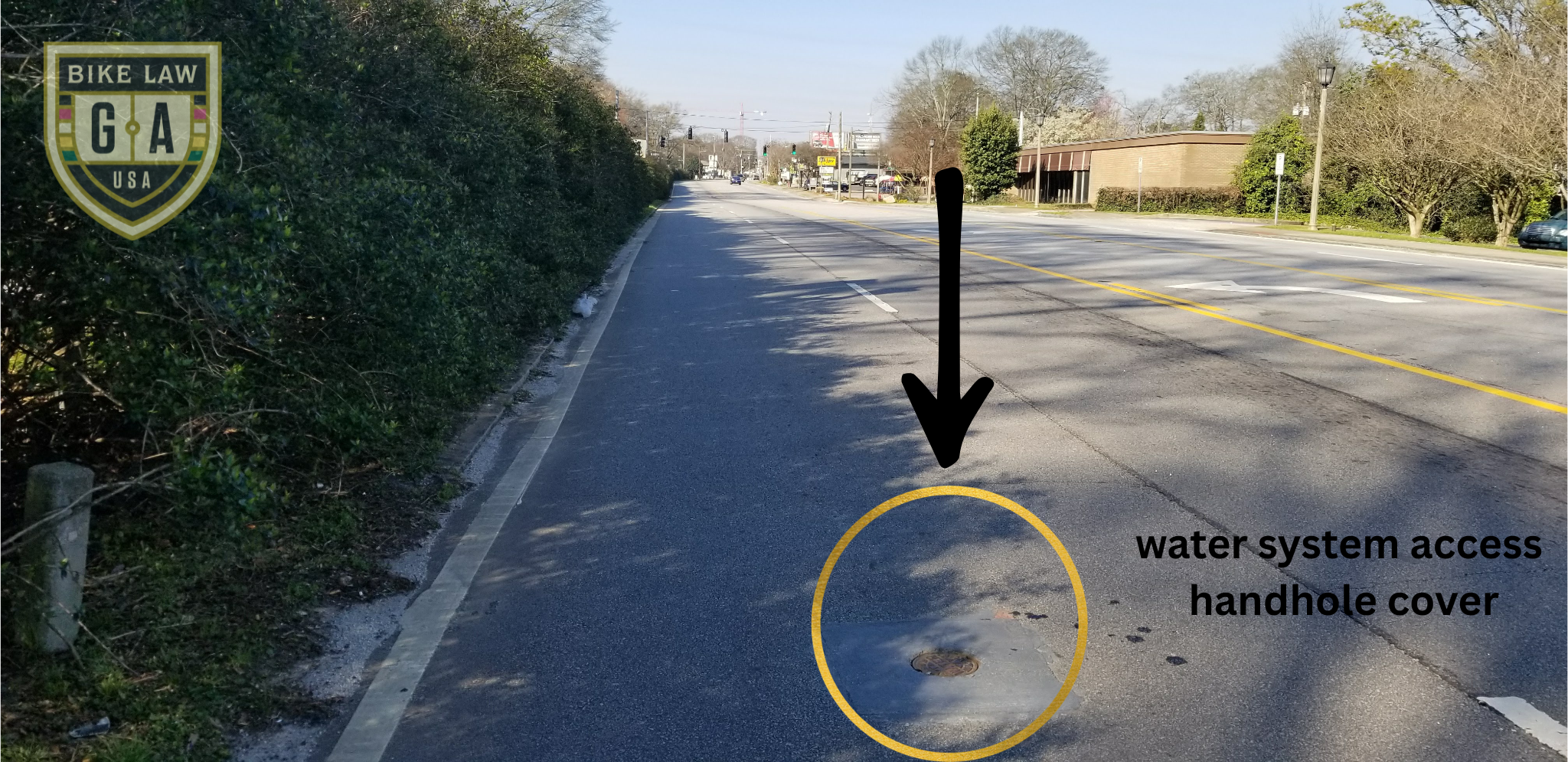
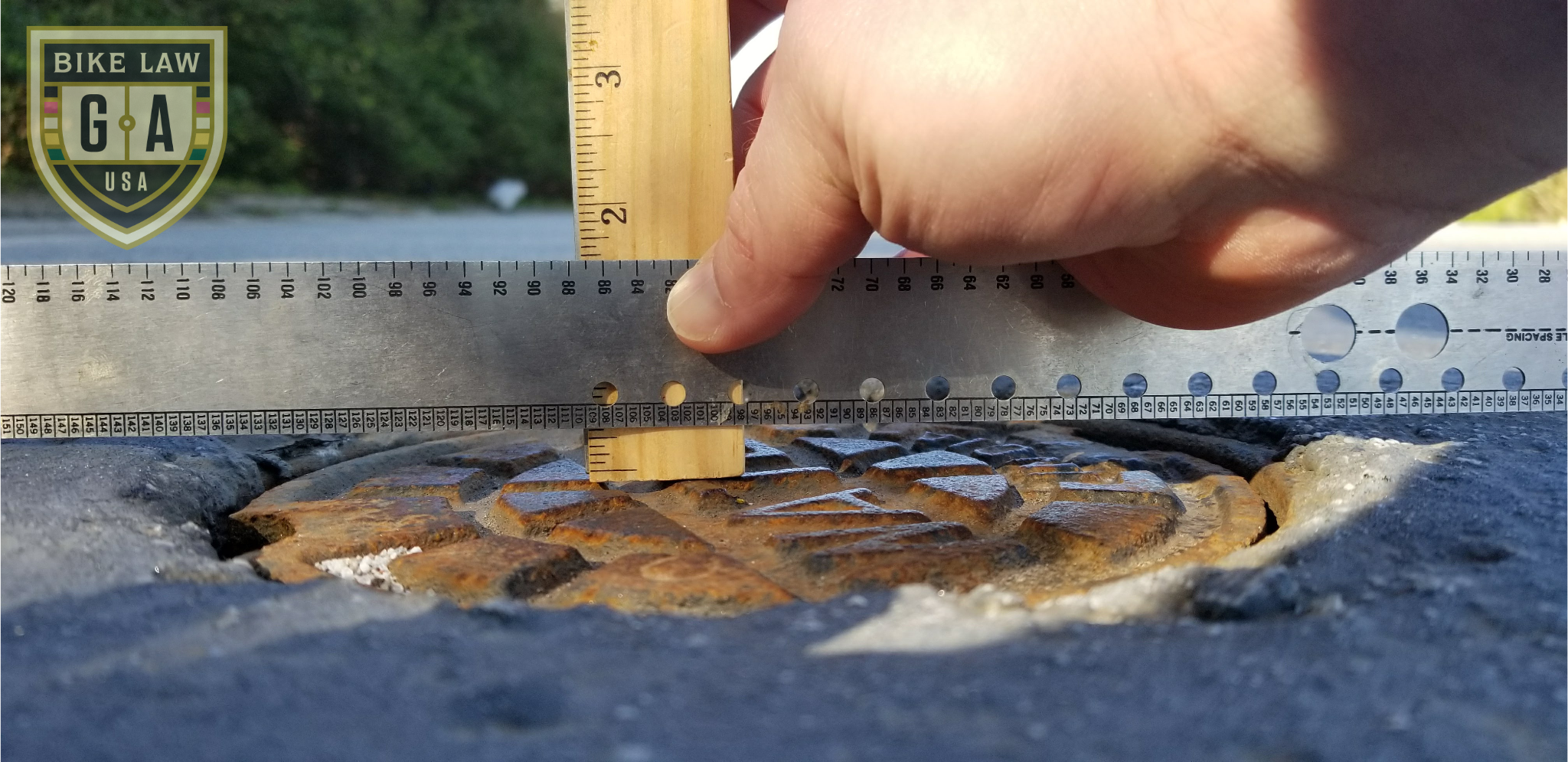
Our client was riding on North Avondale Road, a state highway also designated GA 233, when his bicycle struck a hole in the pavement surrounding a water valve access cover set significantly below the surrounding road grade. The sunken cover functioned as what our team called a hazardous mantrap for a bicycle tire.
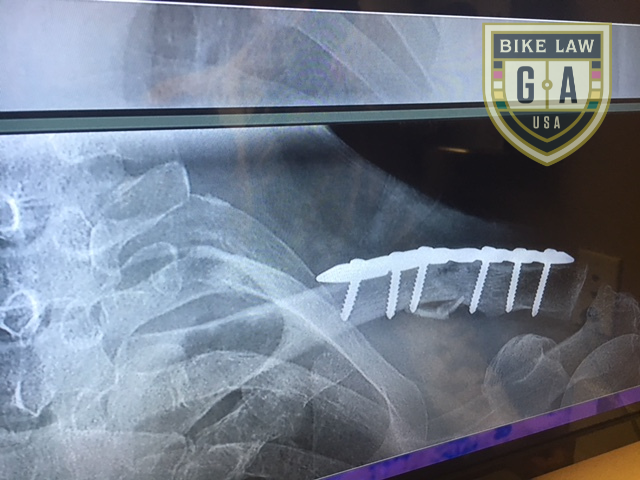
He crashed and suffered a broken clavicle, eight broken ribs, and multiple abrasions and road rash. He ultimately needed surgery to repair the clavicle.
How the Hazard Actually Got There
Court filings in the case laid out exactly how this defect came to exist and persist. GDOT resurfaced and milled 5.1 miles of North Avondale Road between June 2014 and January 2015. Because the road runs through the City of Avondale Estates, GDOT's obligation under Georgia law was limited to providing "substantial maintenance," while DeKalb County's Department of Watershed Management was separately responsible for maintaining its own utility infrastructure, including this particular water valve.
In connection with the resurfacing project, GDOT sent a letter to utility owners in July 2013, notifying them of the upcoming work and setting a deadline roughly two months later for any utility owner to submit a permit application for adjustments to bring their infrastructure up to the new grade. It's undisputed that no permit was ever submitted for this valve. Whether the DeKalb County engineer responsible for receiving that notice actually got it, and what she was supposed to do with it if she had, became disputed questions of fact central to the case.
No one could determine exactly how long the hazard existed before the crash. But Google Street View imagery from November 2014, January 2015, and April 2015, all pulled during litigation, showed the same newly resurfaced street with the same hole surrounding the water valve the entire time, evidence that the hazard had been sitting in plain sight for well over a year before our client rode through it.
Two Government Entities, Two Different Sets of Rules
This case was legally more complicated than a typical single-defendant crash, because responsibility for the road and the utility installation didn't rest with just one government entity.
GDOT, a state agency, is responsible for maintaining GA 233 as a state route and for enforcing its own utility accommodation standards, which govern how utilities like water system access points are installed and maintained within the state's right-of-way. DeKalb County's Department of Watershed Management, meanwhile, owned and had installed the water system access point itself. Our team's contention was that GDOT failed to follow its own regulations by not paving over the access point or requiring DeKalb County to bring its utility installation up to grade, and that DeKalb County bore separate responsibility for the installation itself falling out of compliance with the surrounding roadway.
Pursuing a claim against a state agency and a county at the same time means navigating two entirely different legal frameworks. Claims against GDOT fall under the Georgia Tort Claims Act (O.C.G.A. § 50-21-20 et seq.), which requires a formal ante litem notice within 12 months of discovering the injury, delivered to both the Department of Administrative Services' Risk Management Division and GDOT itself, and caps state liability at $1 million per occurrence. Claims against DeKalb County fall under a different statute, O.C.G.A. § 36-11-1, which also requires notice within 12 months but with less rigid content requirements than either the state or municipal notice statutes. Getting either notice wrong, or missing either deadline, can be fatal to a claim regardless of how strong the underlying facts are.
Winning the Fight Before It Ever Reached a Jury
GDOT fought hard to get out of this case entirely, and the legal battle over that single question shaped most of the litigation.
GDOT argued that Georgia's Tort Claims Act specifically preserves its sovereign immunity for losses tied to "inspection powers or functions," meaning it couldn't be held liable even if its inspections of the road were negligent. Courts had previously agreed with GDOT in cases involving oversight of active construction projects, like stockpiled materials in a median or an accident involving a paving crew. Our team argued this case was different: it wasn't about oversight of an active construction contract, but about GDOT's duty to inspect the roadway itself for hazards, a duty Georgia courts have treated differently and found immunity waived for in prior cases involving unsafe road design and negligent reopening of a railroad crossing. The court agreed, finding that GDOT's immunity was waived to the extent it was negligent in inspecting the roadway for exactly this kind of hazard, particularly since GDOT's own final inspection took place while the hole was already visible in Street View imagery.
GDOT also argued it owed no duty at all to maintain the water valve, since DeKalb County alone was responsible for the utility. The court rejected that too, holding that GDOT's statutory duty of "substantial maintenance" under Georgia law required it to exercise ordinary care, and that duty could be breached if GDOT knew or should have known about a hazard created during its own resurfacing work and failed to act. The record showed GDOT's own utility accommodation standards called for exactly this kind of valve to be paved over during resurfacing, that no permit was ever obtained to cut the asphalt around it, and that GDOT had other options even if it couldn't fix the valve itself, including alerting DeKalb County formally or directing its contractor to fill the hole. It did none of these things.
Finally, GDOT argued it owed our client only a reduced duty because he was a mere "licensee" on the roadway, and separately that the hazard was so open and obvious that he should have avoided it himself. The court rejected the reduced-duty argument outright, holding that GDOT's maintenance duty applies regardless of a road user's legal status, and sent the open-and-obvious question to a jury as a matter of comparative fault rather than a complete bar to the claim.
Losing all three of these arguments meant GDOT couldn't get out of the case before trial. The DeKalb County engineer who may have received GDOT's original notice also remained a defendant in her individual capacity, since whether her duty to act on that notice was a discretionary judgment call or a simple ministerial task was a disputed factual question for a jury to decide, not something the court could resolve on paper. The City of Avondale Estates, notably, was dismissed from the case entirely at this stage, since Georgia law only makes a city responsible for road maintenance it has specifically agreed to perform, and there was no evidence the City had ever agreed to maintain this state highway.
Four Years to Prove What Should Have Been Obvious
It took almost four years, but our team proved our position through a lawsuit and aggressive litigation against both entities. We secured a settlement before trial with both DeKalb County and GDOT.
The Legal Team Behind the Case
- Bruce Hagen and Kendrick K. McWilliams — Lawyers for People on Bikes
- Dan Pruitt — Litigation paralegal
- Amie Risley — Negotiations paralegal
Hagen Rosskopf operates as Bike Law Georgia, part of Bike Law USA, a national network of attorneys who focus exclusively on representing injured cyclists and advocating for safer roads.
What This Case Shows
A dangerous road defect doesn't always have a single owner. When a state route and a county utility installation intersect, so does the responsibility, and so do the deadlines. A case like this requires identifying every entity that may share liability early, since missing the notice window for even one of them can permanently close off part of a claim, no matter how clear the underlying negligence turns out to be.
This is exactly the kind of case where trying to go at it alone, or working with an attorney unfamiliar with government liability claims, can quietly cost someone their entire recovery before a lawsuit is even filed. Two different ante-litem statutes, two different deadlines, two different sets of required content, and a four-year fight that ultimately required aggressive litigation against both entities simultaneously: this isn't a case where a single missed detail is a minor setback. It's the difference between a full recovery and no recovery at all. That complexity is precisely why cases involving government defendants call for a personal injury lawyer experienced with these specific statutes, not just personal injury litigation generally.
Frequently Asked Questions
What is an ante litem notice? An ante litem notice is a formal written notice Georgia law requires before you can sue a government entity, whether that's a city, a county, or the state itself. It generally must describe the time, place, and extent of the injury, the negligence involved, and be delivered to the correct office within a strict deadline that varies by entity, six months for a city, twelve months for a county or the state. Missing the deadline, sending it to the wrong office, or leaving out required information can permanently bar an otherwise valid claim, no matter how strong the underlying facts are. This case required navigating two separate ante litem notices at once, one for GDOT and one for DeKalb County, each with its own rules.
Can you sue the Georgia Department of Transportation for an injury caused by a road hazard? In certain circumstances, yes. The Georgia Tort Claims Act provides a limited waiver of the state's sovereign immunity for injuries caused by the negligence of state employees or agencies acting within the scope of their duties. Doing so requires a formal ante litem notice under O.C.G.A. § 50-21-26, delivered within 12 months to both the Department of Administrative Services' Risk Management Division and the state entity involved, and state liability is capped at $1 million per occurrence.
How is a claim against DeKalb County different from a claim against a city like Atlanta? Counties and cities in Georgia are governed by different statutes. A claim against a city requires a six-month ante litem notice under O.C.G.A. § 36-33-5. A claim against a county, like DeKalb County here, instead requires notice within 12 months under O.C.G.A. § 36-11-1, which has less specific content requirements than the municipal or state statutes, but still demands enough detail for the county to investigate the claim.
What happens when more than one government entity may be responsible for a road hazard? Each entity typically has to be evaluated, and often notified, separately, since a state agency, a county, and a city can each carry different duties, different immunity rules, and different notice deadlines for the same stretch of road. Missing the deadline for one entity, even while properly notifying another, can permanently bar a claim against the one that was missed.
Why did GDOT try to argue it was immune from this lawsuit, and why did that argument fail? GDOT relied on a specific exception in the Georgia Tort Claims Act that protects the state from liability for negligent inspections. That exception has succeeded in cases involving GDOT's oversight of active construction contracts, such as accidents involving paving crews or stockpiled materials. Courts have drawn a line, however, between that kind of contract oversight and GDOT's separate duty to inspect a roadway itself for hazards. Because this case involved an alleged defect in the road itself, not oversight of a construction contract, the court found GDOT's immunity was waived to the extent it failed to properly inspect for and address a known hazard.
Injured by a road hazard on a state route or county-maintained road in Georgia? Contact Hagen Rosskopf, our Atlanta bicycle accident attorneys, for a free consultation. There's no fee unless we win your case.