
How a 1.5-Inch Ridge in the Road Led to a Six-Figure Settlement Against the City of Sandy Springs, Georgia
Quick answer: A cyclist injured by a road defect in Sandy Springs, Georgia recovered a substantial settlement after Hagen Rosskopf proved the City had known about the hazardous road condition since at least 2007 and that the City's sovereign immunity protections did not apply to this type of negligence. The case shows that Georgia cities and counties can be held liable for dangerous road conditions when records show they had prior knowledge and failed to act, and it illustrates what a bicycle accident claim against a government entity involves.
Case Study 1 of 30: Cyclist v. City of Sandy Springs, et al.
Sometimes the difference between a minor pothole and a life-altering bicycle accident comes down to a measurement smaller than the width of your thumb.
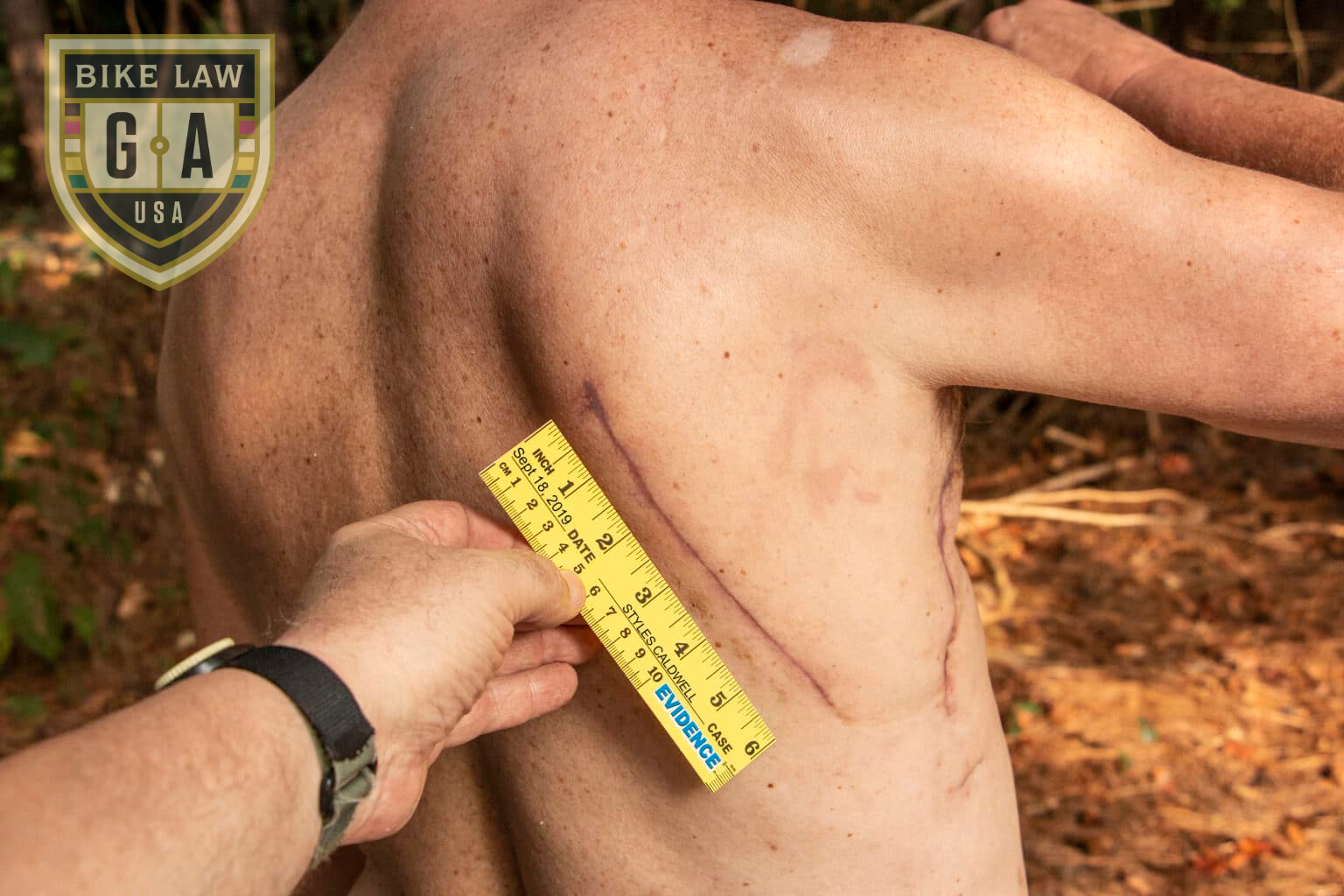
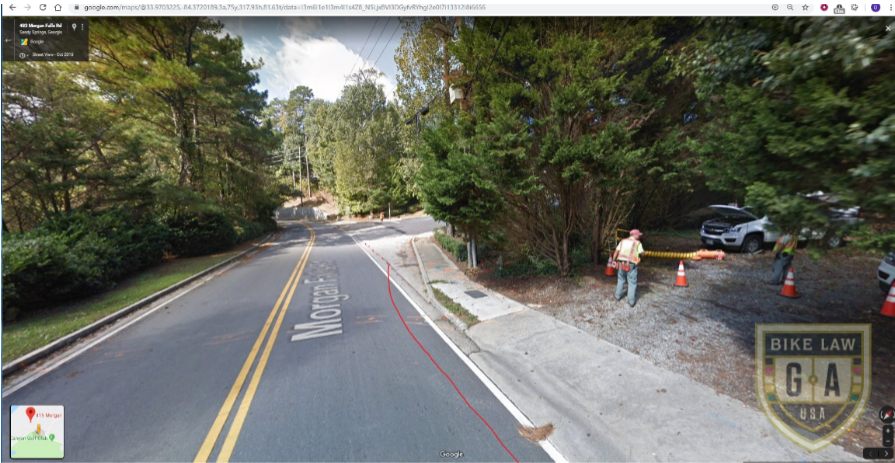
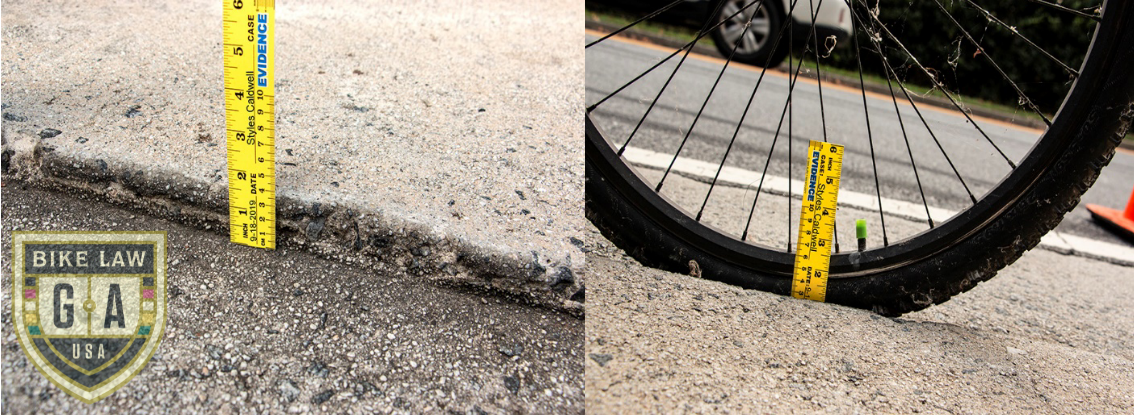
In July 2019, a cyclist riding on Morgan Falls Road in Sandy Springs, Georgia, part of Fulton County, lost control of his bike when his front tire caught a 1.5-inch ridge where the road met the entrance to his apartment complex. He went down hard, suffering several pulverized ribs and a broken collarbone that required surgery. His medical bills totaled $359,000.
What made this bike crash case winnable wasn't just the injury. It was the paper trail the City of Sandy Springs left behind, showing it had known about the danger for years and chose not to fix it.
A Road the City Already Knew Was a Problem
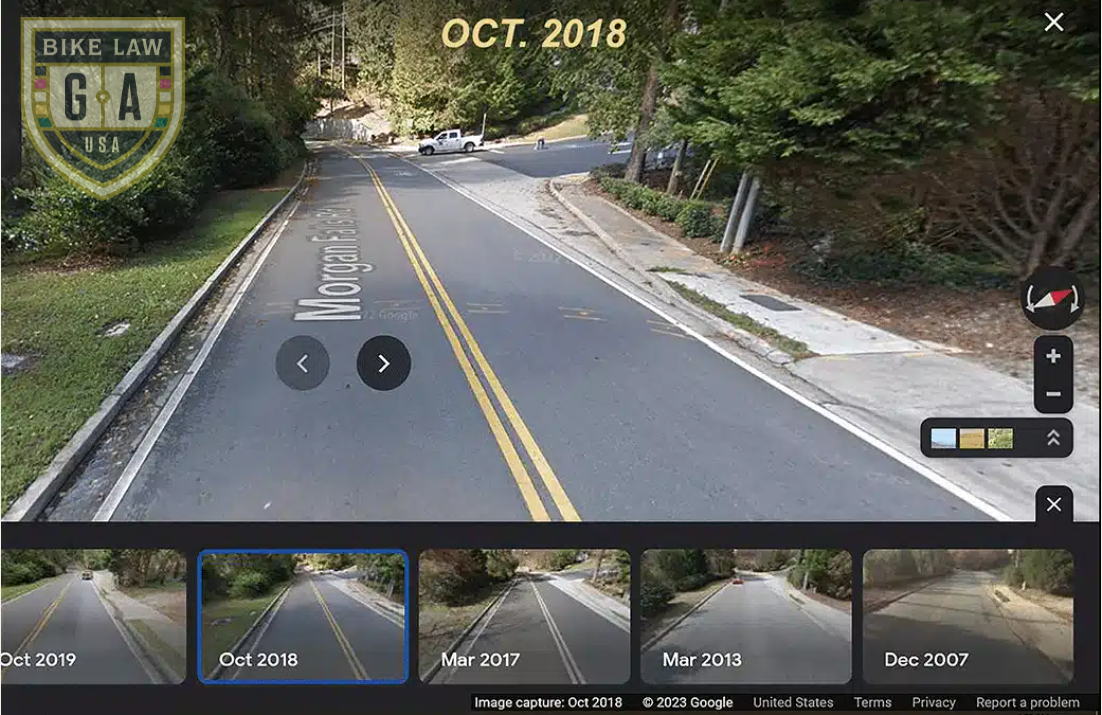
Morgan Falls Road wasn't a secret hazard for cyclists. In 2014, the road had already been assessed a grade of "F" for its Bicycle Level of Service, a formal rating of how safe and usable a road is for bike traffic.
Through a request filed under the Georgia Open Records Act, our firm uncovered what happened next. A large engineering firm that bid on the road improvement project told the City that redesigning that section of road was necessary. The City rejected outside engineering and construction management, choosing instead to handle the project in-house to save money.
Between 2016 and 2017, the City completed a round of improvements, including resurfacing, new bike lane segments, and painted bicycle sharrows. On its website, the City of Sandy Springs proudly announced that bike infrastructure improvements on Morgan Falls Road had been successfully installed.
What the City didn't fix was the severe lip at the entrance to the apartment complex, the same defect that would put our client in surgery three years later.
Building the Case
We filed suit in Georgia in August 2020 and retained two engineering experts in road design and construction to help build the case. Through extensive discovery, multiple depositions, and aerial imaging pulled from Google Maps, the evidence came together to establish four key points:
- The City of Sandy Springs, Georgia, had responsibility for the section of road where the crash occurred.
- The City had known about the hazard since at least 2007 and had failed to fix it.
- The City had a legal duty under Georgia law to correct dangerous conditions on its roads that put cyclists at risk.
- The City did not have the protection of sovereign immunity, which Georgia law generally extends to municipalities, for this particular kind of negligence.
That last point mattered enormously. Under Georgia law (O.C.G.A. § 36-33-1), municipal corporations are generally immune from liability for damages, and that immunity can be difficult to overcome. Georgia courts recognize a distinction between a city's governmental functions, which are generally protected, and situations where a city had actual knowledge of a specific hazard and failed to correct it, along with other statutory and case-law exceptions that can waive that protection. Overcoming a municipality's sovereign immunity is often the single hardest part of a claim against a Georgia city or county. Establishing that the City had actual knowledge of a dangerous condition and failed to act on it was central to moving this case forward.
No Offer at Mediation, So We Prepared for Trial
Mediation failed. The City offered nothing. Rather than accept that outcome, we made clear that we intended to hold the City accountable in front of a Georgia jury and requested a trial date in the Georgia court system.
Facing trial, with two engineering experts, years of documentation, and a clear liability theory already built, the City chose to negotiate. A substantial settlement was reached before the case ever reached the courtroom.
The Team Behind the Case
- Kendrick McWilliams and Bruce Hagen — Personal injury lawyers for cyclists, based in the Atlanta, Georgia area
- Dan Pruitt — Litigation paralegal
- Amie Risley — Negotiations paralegal
- Herman Hill and Daren Marceau — Engineering experts
Bruce Hagen and Hagen Rosskopf operate as Bike Law Georgia, part of Bike Law USA, a national network of attorneys who focus exclusively on representing injured cyclists and advocating for safer roads.
What This Case Shows
Cases against a Georgia city or county are different from cases against another driver. They require piecing together records that a municipality would often rather not produce, understanding Georgia's specific legal exceptions to sovereign immunity, and being willing to walk away from a mediation table that isn't offering anything close to fair value.
If you or someone you love was injured because of a dangerous road, sidewalk, or intersection maintained by a city or county in Georgia, that history matters, and so does having a legal team willing to dig for it.
Frequently Asked Questions
Can you sue a city or county in Georgia for a dangerous road? Yes, in certain circumstances. Georgia municipalities generally have sovereign immunity under O.C.G.A. § 36-33-1, but that immunity is not absolute. A claim can move forward where evidence shows the city had actual knowledge of a specific hazardous condition and failed to correct it, among other recognized exceptions. Every case depends on its specific facts, and an attorney should evaluate whether an exception applies before assuming a claim is barred.
What is sovereign immunity, and why does it matter in a road defect case? Sovereign immunity is a legal doctrine that generally shields government entities, including Georgia cities and counties, from being sued for damages. In cases involving a hazardous road or sidewalk condition, overcoming sovereign immunity is often the central legal battle, separate from proving the defect itself caused the injury.
How do you prove a city knew about a dangerous road condition? In this case, an Open Records Act request uncovered internal city records, engineering bids, and correspondence dating back years before the crash. Combined with formal safety assessments, expert engineering review, and aerial imagery, this evidence established that the City had actual knowledge of the hazard well before the injury occurred.
What should I do after a bicycle accident caused by a road defect in Georgia? Document the specific defect, such as a pothole, ridge, or missing bike lane marking, with photos and measurements if it's safe to do so, seek medical care, and report the hazard to the city or county. Because claims against a government entity involve strict notice deadlines and sovereign immunity issues that don't apply in an ordinary car-versus-bike accident, it's worth speaking to a bicycle accident attorney early, before evidence like traffic camera footage or city maintenance records disappears.
Injured in a bike crash on a dangerous road in Georgia? Contact Hagen Rosskopf, our Atlanta bicycle accident attorneys, for a free consultation. There's no fee unless we win your case.