
$1 Million Settlement for a Cyclist Hit by a Truck on GA 3, Without Ever Filing a Lawsuit
Quick answer: A cyclist struck by a commercial truck on GA 3 in Pike County, Georgia recovered a $1 million settlement, without ever filing a lawsuit, after Hagen Rosskopf uncovered the truck driver's history of distracted driving violations and the trucking company's repeated loss of federal operating authority. A 3D crash reconstruction proved the driver had nearly half a mile and 37 seconds of clear sightline to see the cyclist before impact.
Case Study 2 of 30: Cyclist v. Luni Trucking, Inc.
This case study is a real story from a bike case Hagen Rosskopf handled for a real client. Details are shared to show what's possible when a cycling accident claim is fully investigated, not as a hypothetical or a marketing example.
The driver told police the cyclist "darted quickly into traffic." The evidence told a very different story.
What Happened
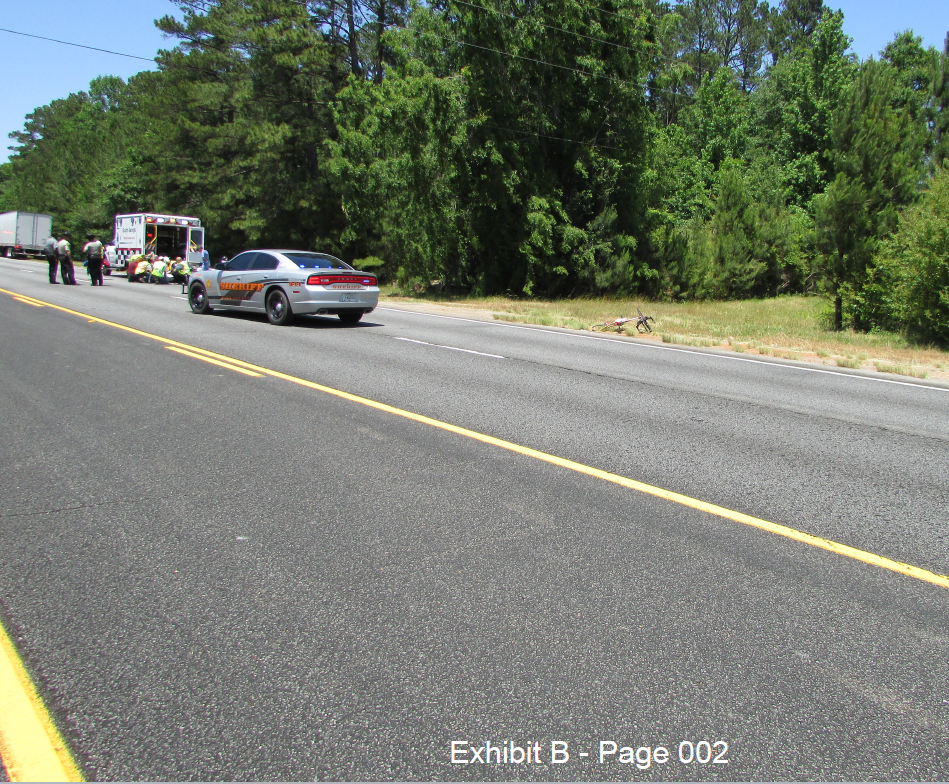
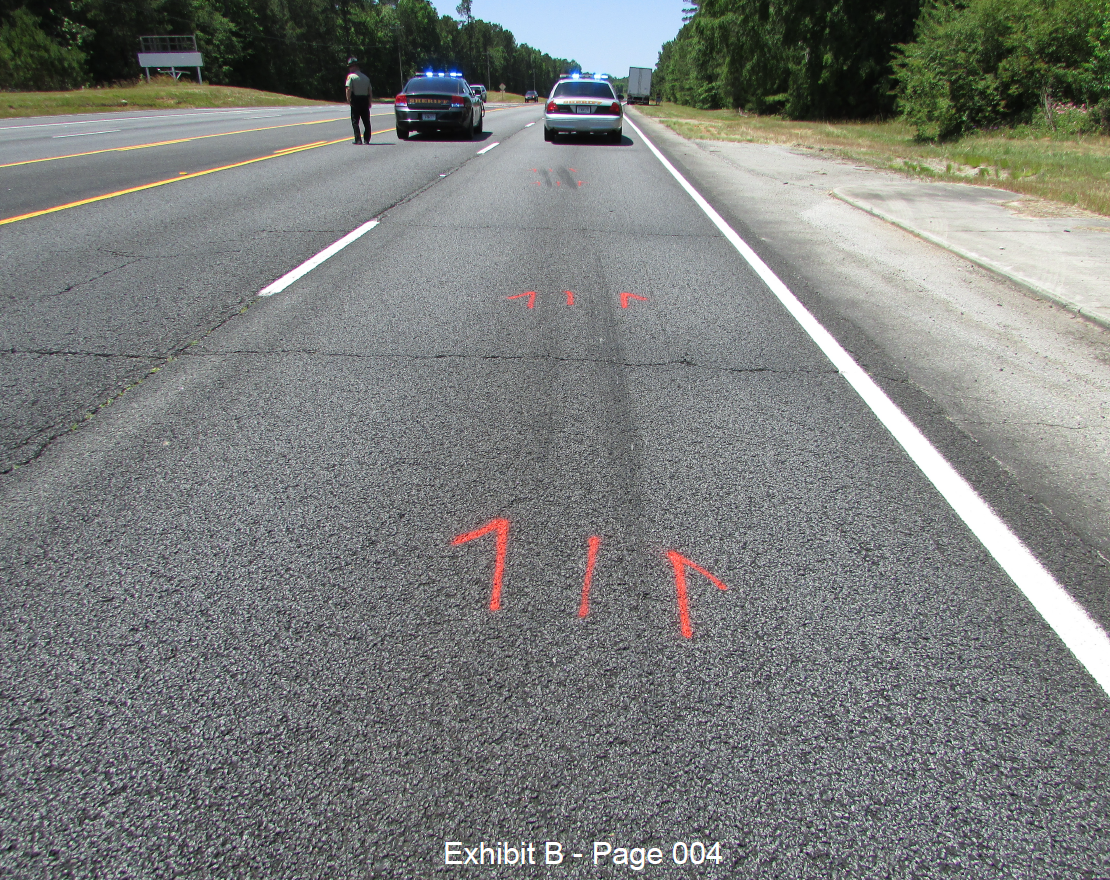
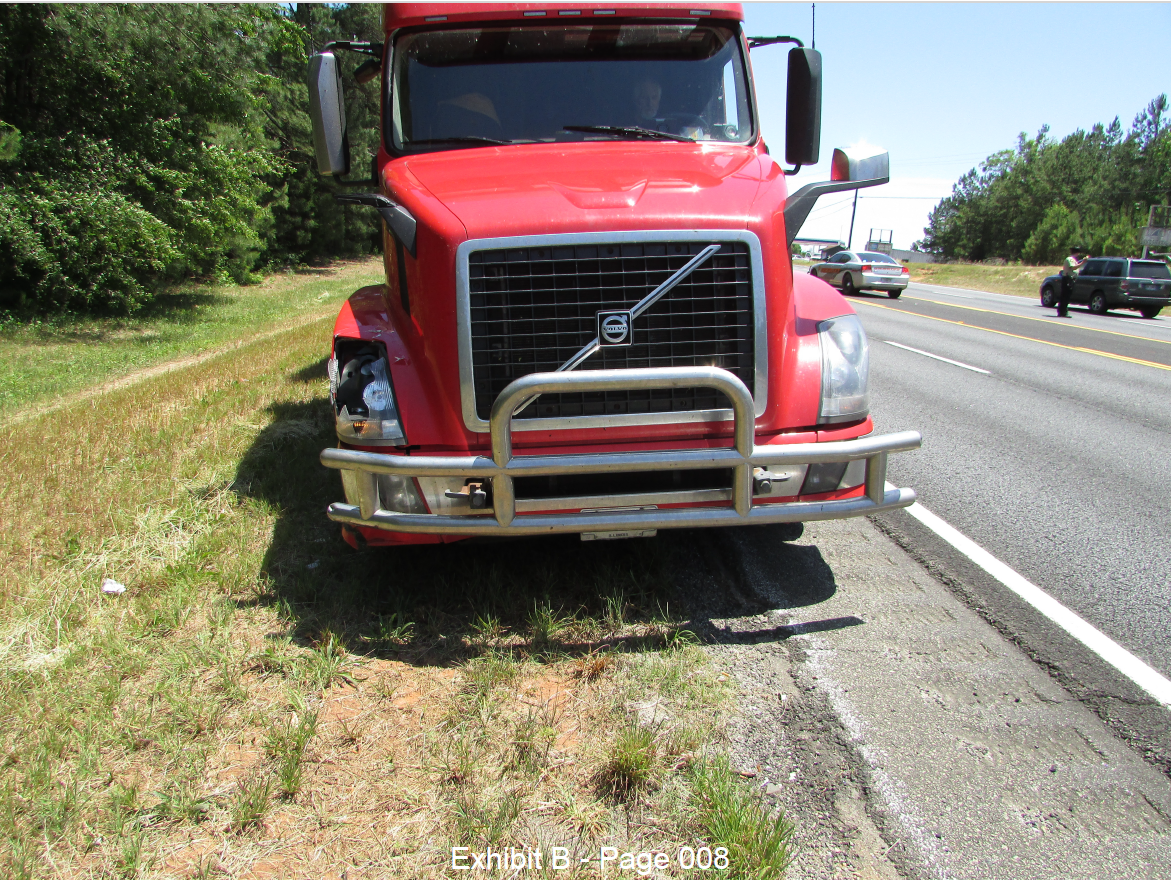
A cyclist was riding on GA 3 in Pike County, Georgia, when a truck driver swerved across the fog line and struck him. In reality, far from darting into traffic, the cyclist had moved further to the right, onto the shoulder of the road, specifically to keep himself safe.
The cyclist was airlifted from the scene. He suffered extensive facial, skull, and lumbar fractures, a loss of consciousness, and a traumatic brain injury.
The Driver's Story Didn't Hold Up
Immediately after the crash, the truck driver tried to shift blame onto the cyclist, telling the investigating officer that the cyclist had darted into traffic. Our investigation showed the opposite: the cyclist had positioned himself as far from traffic as the road allowed.
That kind of driver-versus-cyclist "he said" account is common after a crash like this, and it's exactly why an independent investigation matters. Police reports are often built around the surviving party's version of events, particularly when the injured party is unconscious or airlifted from the scene and unable to speak for themselves in the moment.
The Investigation Went Well Beyond the Crash Scene
Our legal team didn't stop at the collision itself. We investigated the truck driver and his employer, Luni Trucking, Inc., and found a documented history that changed the scope of the case entirely.
The driver had a history of commercial vehicle violations, including a prior violation for using a cellphone while driving, a practice federal law prohibits for commercial drivers under 49 CFR § 392.82. That regulation bars a commercial motor vehicle driver from using a hand-held mobile phone while driving, and separately bars the motor carrier from allowing or requiring that conduct. The driver had a recorded pattern of distracted driving that his employer had ignored.
We also discovered that the Federal Motor Carrier Safety Administration (FMCSA) had revoked Luni Trucking's interstate operating authority on at least two prior occasions. At that point, this was no longer just a case about one driver's negligence in one moment. It was a case about a trucking company that had a documented pattern of disregarding federal safety compliance and kept a driver on the road with a known history of distraction.
Proving the Driver Could Have Avoided the Crash
To remove any doubt about what the driver could and should have seen, our team built a 3D laser-mapped animation of the crash scene. That reconstruction proved the driver had a clear, unobstructed line of sight of almost half a mile, for a full 37 seconds, while traveling 55 miles per hour before impact.
The cyclist wasn't hard to see, either. He was wearing high-visibility clothing at the time of the crash.
No Lawsuit Necessary
Conducting a thorough investigation early, one that went well beyond the crash scene itself, was central to this case. Just as important was making sure the attorneys representing the driver and the trucking company understood, without question, that we were prepared to present our findings to a jury at trial if it came to that.
It didn't. The strength of the evidence, the driver's documented history, the company's FMCSA violations, and the crash reconstruction, led to a $1 million settlement for the cyclist without ever filing a lawsuit.
The Team Behind the Case
- Bruce Hagen — Personal injury lawyer for cyclists
- Dan Pruitt — Pre-litigation case manager
- Amie Risley — Negotiations paralegal
Bruce Hagen and Hagen Rosskopf operate as Bike Law Georgia, part of Bike Law USA, a national network of attorneys who focus exclusively on representing injured cyclists and advocating for safer roads.
A Helmet, and Why It Matters
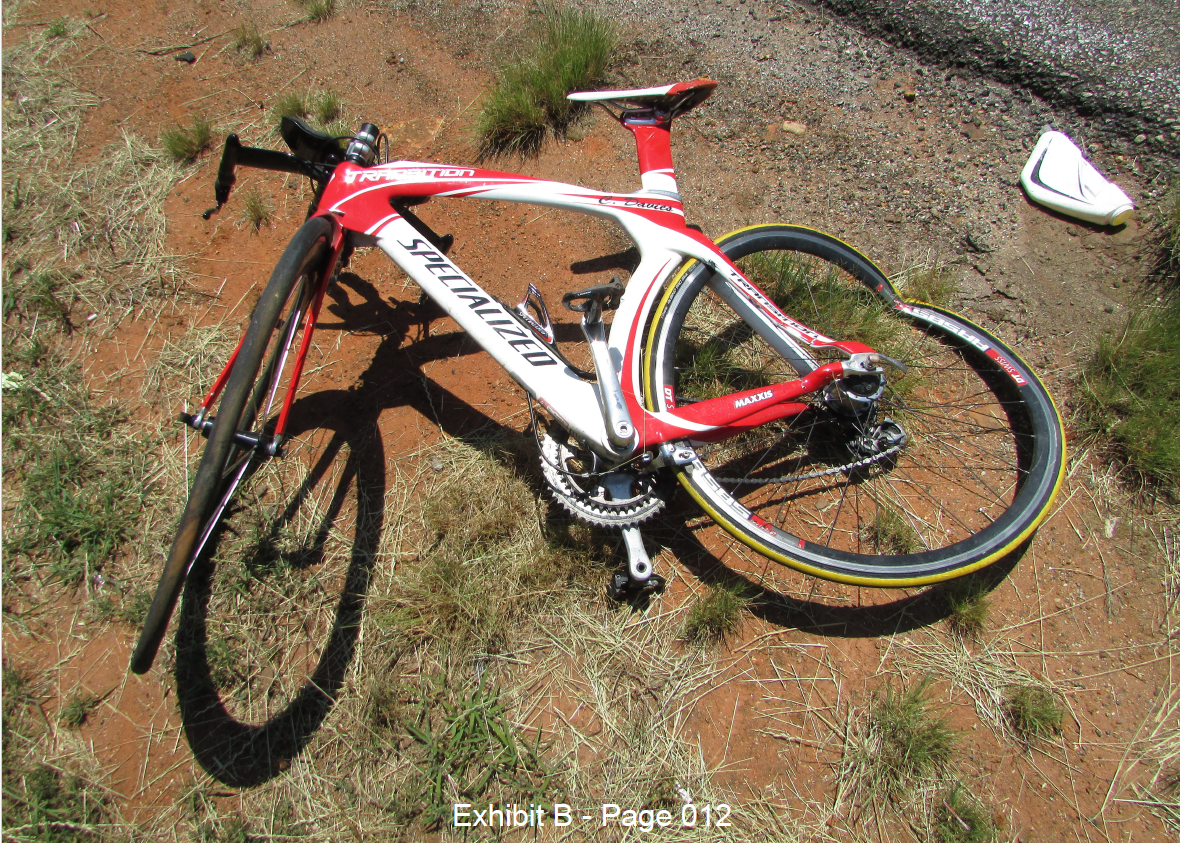
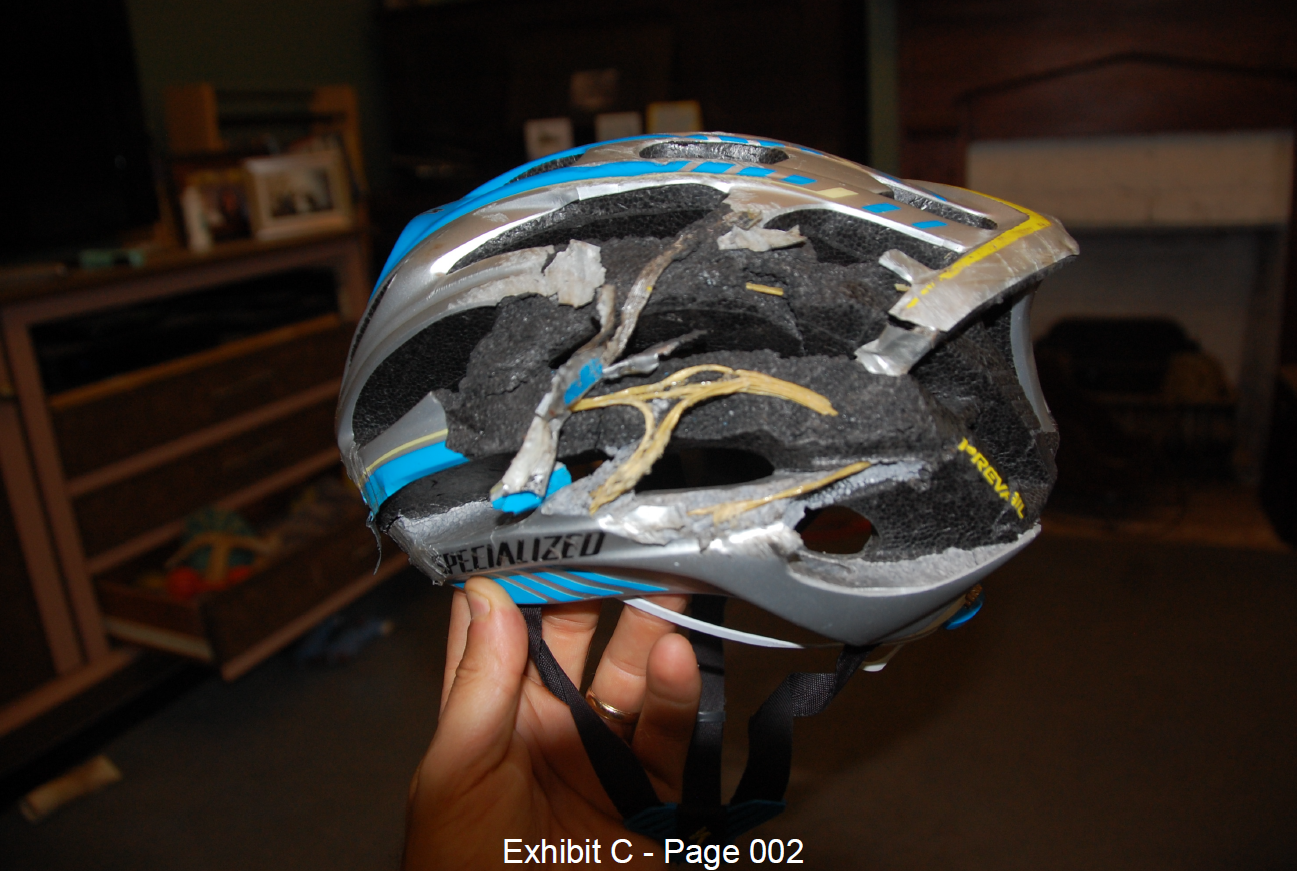
The cyclist's helmet may have saved his life. His firm has used a photo of that helmet in hundreds of educational classes and clinics across Georgia since.
That's not just a sentimental detail. A Cochrane Collaboration review of controlled studies found that helmet use reduces the risk of head, brain, and severe brain injury in a bicycle crash by roughly 63 to 88 percent, and NHTSA's own fatality data show that a clear majority of cyclists killed in crashes were not wearing a helmet at the time. A helmet doesn't prevent a truck from swerving across a fog line, and it doesn't replace the driver's duty to look for cyclists on the road, but in the moment of impact, it's often the single factor that determines whether a traumatic brain injury is survivable or fatal. Every case our firm handles involving a helmeted rider is a reminder of how much that piece of foam and plastic can matter, and every case involving one who wasn't wearing one is a reminder of why we keep talking about it.
What This Case Shows
A crash between a cyclist and a commercial truck is rarely just about the moment of impact. A trucking company's hiring practices, a driver's violation history, and a carrier's federal compliance record can all be directly relevant to a claim, and can significantly expand what a case is worth. That kind of investigation takes time and resources most people don't have while they're recovering from a traumatic brain injury.
Frequently Asked Questions
Can a trucking company be held liable for a driver's phone use in Georgia? Yes. Federal regulation (49 CFR § 392.82) prohibits both the driver from using a hand-held mobile phone while operating a commercial motor vehicle and the motor carrier from allowing or requiring that conduct. When a company has knowledge of a driver's history of distracted driving and continues to employ that driver, it can face liability independent of the driver's own negligence.
What does it mean if the FMCSA revoked a trucking company's operating authority? The Federal Motor Carrier Safety Administration can revoke a motor carrier's interstate operating authority for serious or repeated safety compliance failures. A documented history of revocation can be powerful evidence of a pattern of disregard for federal safety standards, which matters both for establishing liability and for demonstrating the kind of company culture that put a driver like this back on the road.
What should I do if I'm a cyclist involved in a crash with a truck driver? Get medical attention right away, even if you feel able to walk away, since injuries like a concussion or internal trauma aren't always obvious at the scene. If you can, take photos of the crash scene, your bike, your injuries, and the truck, including the company name and any markings on the vehicle before it leaves. Get contact information for any witnesses, since truck drivers often dispute what happened and a witness account can be decisive. Don't accept blame or agree to a recorded statement with the trucking company's insurer before speaking with an attorney, and don't discard damaged gear like your helmet or clothing, since it can become important evidence. Commercial trucking cases move fast: a company's insurer and legal team are typically investigating within hours, and driver logs, dash cam footage, and electronic control module data can be lost or overwritten if not preserved quickly. Contacting a bicycle accident attorney experienced with commercial trucking cases as soon as possible gives you the best chance of the same kind of investigation that built this case.
Do you have to file a lawsuit to get a fair truck accident settlement in Georgia? Not necessarily. A strong pre-litigation investigation, including driver history, employer records, expert crash reconstruction, and a clear signal that the case is trial-ready, can lead insurers and defense attorneys to settle before a complaint is ever filed. That said, being fully prepared to file suit and go to trial is often what makes a strong pre-suit settlement possible in the first place.
Injured in a crash with a commercial truck while cycling in Georgia? Contact Hagen Rosskopf, our Atlanta bicycle and trucking accident attorneys, for a free consultation. There's no fee unless we win your case.