
If You’ve Been in a Car Wreck: Why the book Litigating Minor Impact Soft Tissue Cases Matters to You (and How Bruce Hagen Helped Shape It)
You might still be feeling the effects of your auto collision. Maybe your neck is stiff, your back hurts, or your headaches won’t quit. And maybe your insurance company said your crash was “minor impact” and tried to pay you very little—or even nothing—because the cars didn’t look badly damaged. That’s very common, but it doesn’t mean your injury isn’t real or that you’re out of options.
There’s a legal book used by many attorneys who handle these kinds of injuries called Litigating Minor Impact Soft Tissue Cases. It’s not a general textbook. It’s a practical toolkit lawyers use to help people just like you get fair compensation after a low-damage crash—especially when the injuries are soft tissue injuries, like strains, sprains, whiplash, and other connective-tissue harms that aren’t obvious on X-rays.
What does “minor impact soft tissue” even mean?
When your car crash gets labeled by the insurance company as a MIST case, it’s because:
· The visible damage to the vehicles is small (less than what most people think of as a “serious” crash), and
· Your injury is a soft tissue injury—pain in muscles, ligaments, tendons, and discs rather than broken bones or life-threatening trauma.
That doesn’t mean your injury is unimportant. Soft tissue injuries can cause real pain, lost wages, medical bills, emotional stress, and lasting symptoms—even months after the collision.
The problem is that many insurance companies treat MIST claims as if they’re not serious—because they’re harder to “prove” with a photo or MRI and because insurers have created internal tools that automatically devalue them. This often leads to unfair settlement offers unless your lawyer knows how to push back.
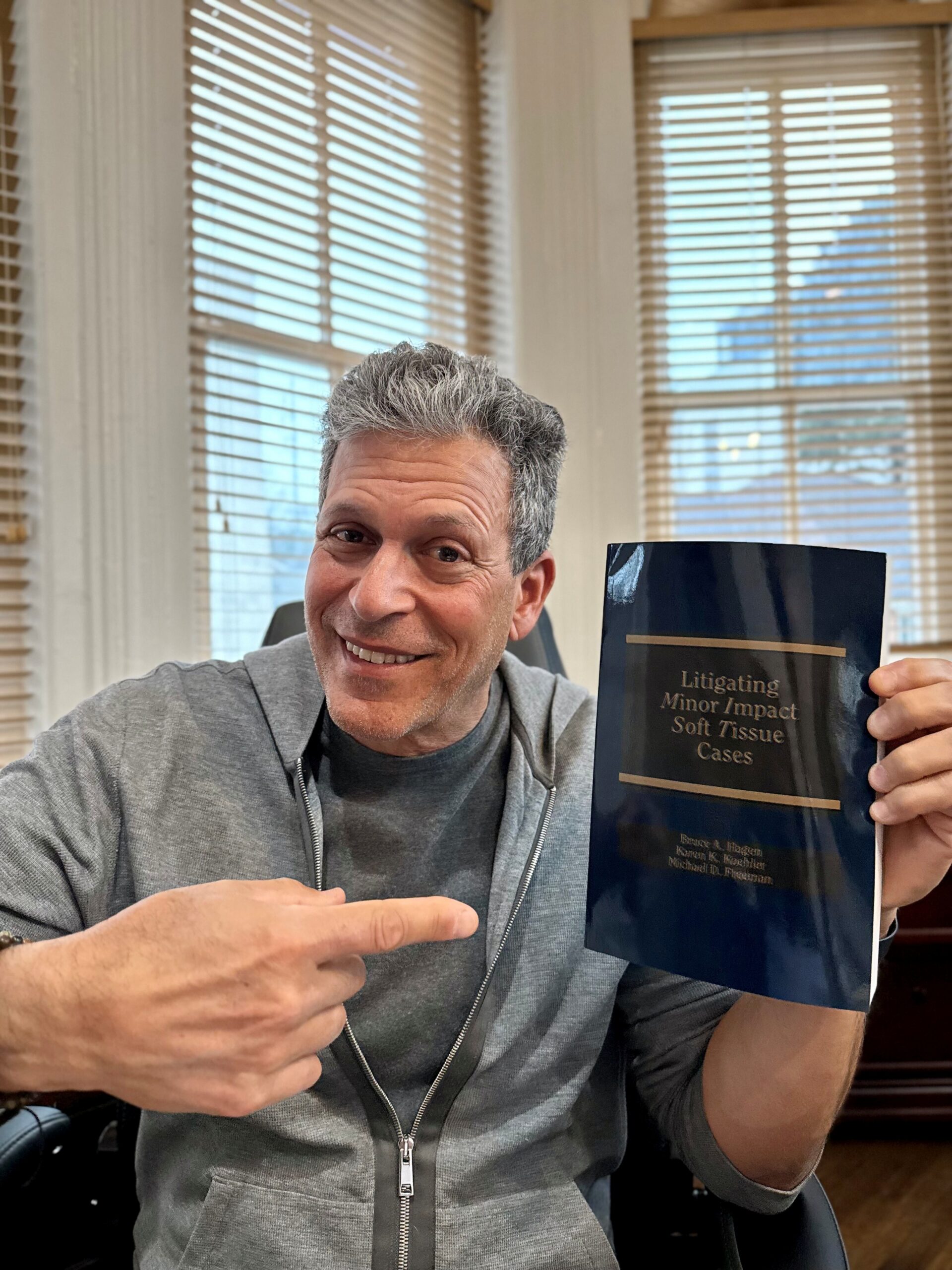
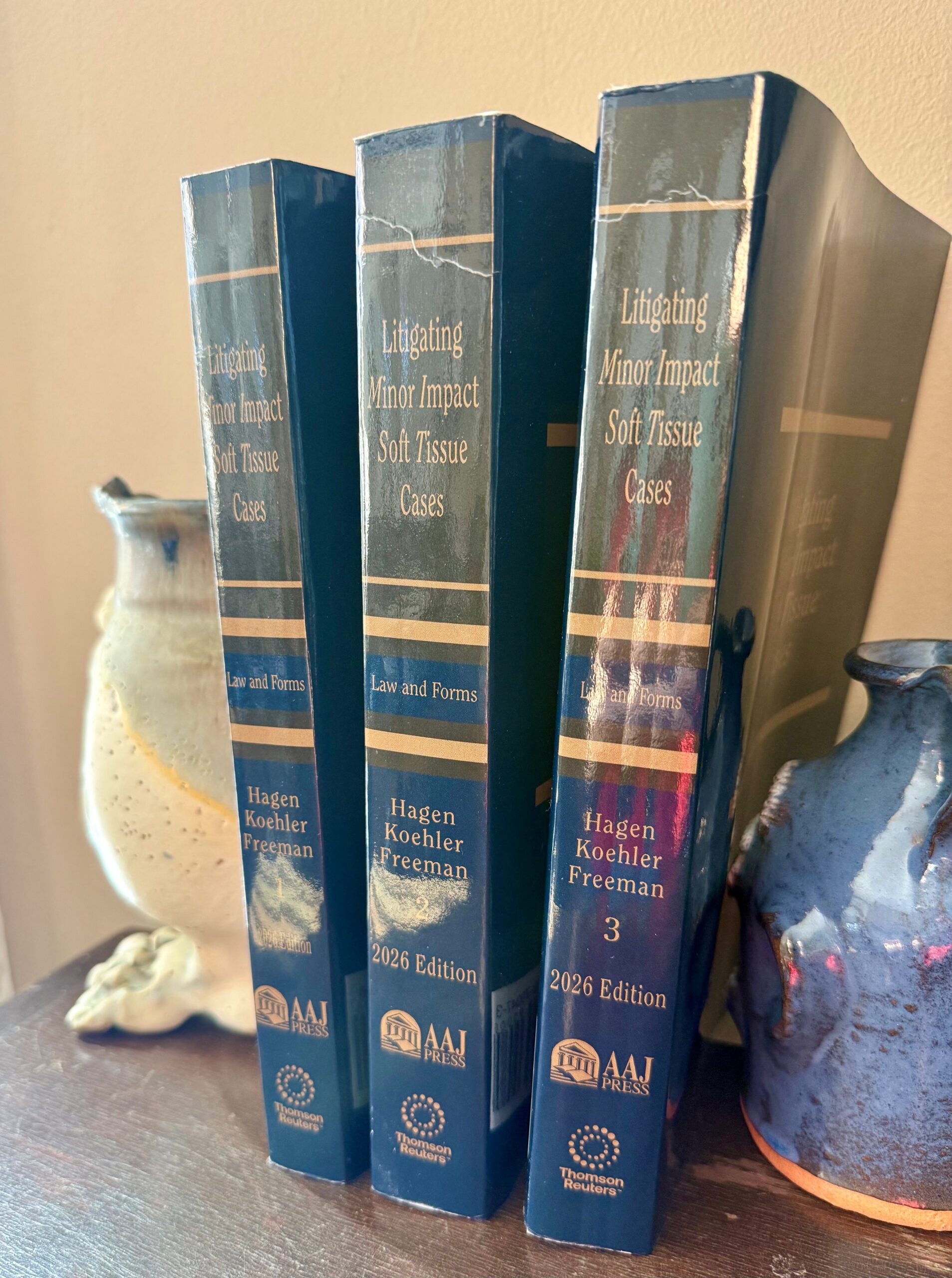
What is the book Litigating Minor Impact Soft Tissue Cases?
Think of this book as a roadmap for lawyers on how to properly handle these tricky low-impact injury claims. It teaches lawyers:
· how insurance companies think and how they evaluate these claims,
· how to gather the right medical evidence to support your injuries,
· how to document your case from the moment you walk in the door,
· how to challenge the insurer’s defenses,
· and how to fight for fair compensation, whether through settlement or trial.
This book is not written for clients—it’s written for lawyers—but the strategies and ideas inside are directly meant to help people injured in car accidents get justice.
Trial Guides described the book as “rewritten by trial lawyer Bruce Hagen,” calling it “the first to address how lawyers could fight the minor impact defense.”
Why many personal injury lawyers rely on it
Insurance companies often use the fact that your vehicle didn’t sustain much damage as an excuse to say your body wasn’t hurt. But those two things aren’t the same: your body can be injured even when cars hardly look banged up.
The book shows lawyers how to:
· explain your injury to an adjuster in a way that makes sense,
· prepare strong evidence so your pain and suffering are backed up by facts,
· work with doctors and medical professionals to document your condition,
· and avoid common mistakes that can cost you money later.
In other words: it’s meant to level the playing field when insurers try to push you aside because they think your case is “minor.”
Who is Bruce A. Hagen—and why his involvement matters
Bruce Hagen is a practicing personal injury lawyer in Decatur, GA who joined the authorship of this book in 2016. When he came on board, the book added new chapters and expanded its practical focus, especially on real-world issues that matter in today’s injury claims.
That’s not a small thing. The book already blended legal strategy and medical evidence—but when a practicing trial lawyer like Bruce Hagen becomes an author, it brings actual courtroom experience into the guidance. He helped shape parts of the book that relate to how real cases evolve from the moment someone walks into a lawyer’s office, not just theoretical principles.
Bruce Hagen’s addition to the book wasn’t just a new author name on the cover—it came with new material explicitly developed for modern cases, including:
· Chapter 21 — Social Media and Discovery (2015 - 2016 edition)
· Chapter 31 — Establishing the Credibility of Your Client (2015 - 2016 edition)
· Revised Chapter 9 – Initial Client Meeting (2016 - 2017 edition)
· Revised Chapter 10 – Preliminary Insurance Matters (2016 - 2017 edition)
· Revised Chapter 11 – Investigating The Claim (2016 – 2017 edition)
· Chapter 70 — Trials in the Time of COVID (2021 - 2022 edition)
· Chapter 50 — Everything a New Lawyer Needs to Know About Their First Year as a Personal Injury Lawyer (2023-2024 edition) *by Alicia S. Harry, Associate Attorney at Hagen Rosskopf in 2024
· Chapter 51 — Leveraging AI in Pre-Suit Minor Impact Soft Tissue (MIST) Personal Injury Cases (2025-2026 edition)
These were not incidental additions—they were direct responses to common problems people face in real MIST cases. And they reflect Bruce Hagen’s practical courtroom experience being translated into a tool other lawyers can actually use.
Why Bruce Hagen hates the term “MIST cases”
In his preface to the 2025-2026 edition, Bruce Hagen said, “I don’t refer to cases as MIST cases. I find the use of that term to be insulting to my clients and dismissive of their claims. It is an acronym created by insurance companies to minimize the claims of our clients. Using the term “MIST”, I believe allows the insurance companies to dictate the tone of any discussion over the merits of our clients’ cases. Has a client ever walked into a lawyer’s office and said “I have a MIST claim”? No, they tell us they are injured and in pain as a result of someone’s carelessness. MIST is an insurance industry phrase.”
What this means for you as someone injured in a car wreck
1. Your injury is real even if the car looks fine
Just because your vehicle didn’t crumple doesn’t mean your body wasn’t hurt. Soft tissue injuries can hurt deeply and last a long time. So talk to a personal injury lawyer even if you aren’t sure if you have a claim.
2. Insurance companies downplay these claims for profit
They may tell you the crash was “minor” and offer a low settlement, but that doesn’t reflect the real impact on your life nor the true value of your case. Insurance companies routinely offer lesser settlements to claimants without legal representation. Get yourself a good lawyer!
3. You need a lawyer who knows how to fight that hardball approach
Lawyers who rely on resources like Litigating Minor Impact Soft Tissue Cases have a step-by-step guide for how to push back. Take it a notch up and hire the trial lawyer who wrote the book. You can email Bruce Hagen directly [email protected]
4. Your medical records and credibility matter as much as paint damage
One of the toughest parts of soft tissue cases is convincing others that your pain is real—strong documentation and a lawyer who knows how to present it can change the value of your personal injury claim.
5. A lawyer with courtroom experience makes a difference
That’s exactly what Bruce Hagen’s work on this book helps other attorneys learn—how to do this right, not halfway. It’s the behind-the-scenes playbook for lawyers authored by a trial lawyer with more than 200 trials under his belt and 40 years practicing law in Atlanta, Georgia.
Bottom line
If you’ve been injured in a crash and told your case is “just a minor impact,” don’t assume that means your car accident case isn’t worth pursuing. That label is often just a hurdle insurance companies throw up to lower payouts.