ATLANTA PEDESTRIAN ACCIDENT ATTORNEY
Pedestrians are among the most at-risk group in traffic accidents and often sustain greater injuries in any collision with a vehicle. As an Atlanta personal injury law firm, our team of Atlanta pedestrian accident lawyers has fiercely advocated for accident victims for over 30 years, including families who have lost a loved one to a pedestrian death. We handle car accident and pedestrian injury cases throughout Atlanta, Decatur, and metro Atlanta.
Everyone has a responsibility to stay aware of their surroundings, pedestrians included. But those operating larger, more dangerous vehicles carry a greater responsibility than pedestrians or cyclists to prevent accidents. If you've been hit as a pedestrian, knowing the steps to protect your rights is critical.
What Should I Do If I’ve Been Hit As A Pedestrian?
DO:
Dial 911: call the police or an ambulance immediately.
Get examined for injuries as a result of the accident.
Be honest and give only the facts to the police.
Take photos and/or videos of the scene of the accident if possible, for any subsequent accident claim.
Get the contact information for any witnesses or involved party.
Know your rights. Familiarize yourself with Georgia Codes about Pedestrians.
Read our blog for support like Why You Need Uninsured/Underinsured Motorist (UM/UIM) Coverage.
Don't:
Don’t leave the scene unless you are seriously injured and must visit the hospital.
Don’t discuss the accident or your injuries with other people involved in the accident.
Don’t make any statement to an insurance company until you talk to a Pedestrian Accident Lawyer.
Don’t post anything on social media about the accident. It could complicate your insurance claim or potential pedestrian accident lawsuit.
Don't wait to get legal help. If you were hit by a car as a pedestrian, a free consultation with a personal injury attorney costs nothing and can protect your right to compensation.
Why Are Pedestrians Often Blamed for the Accident?
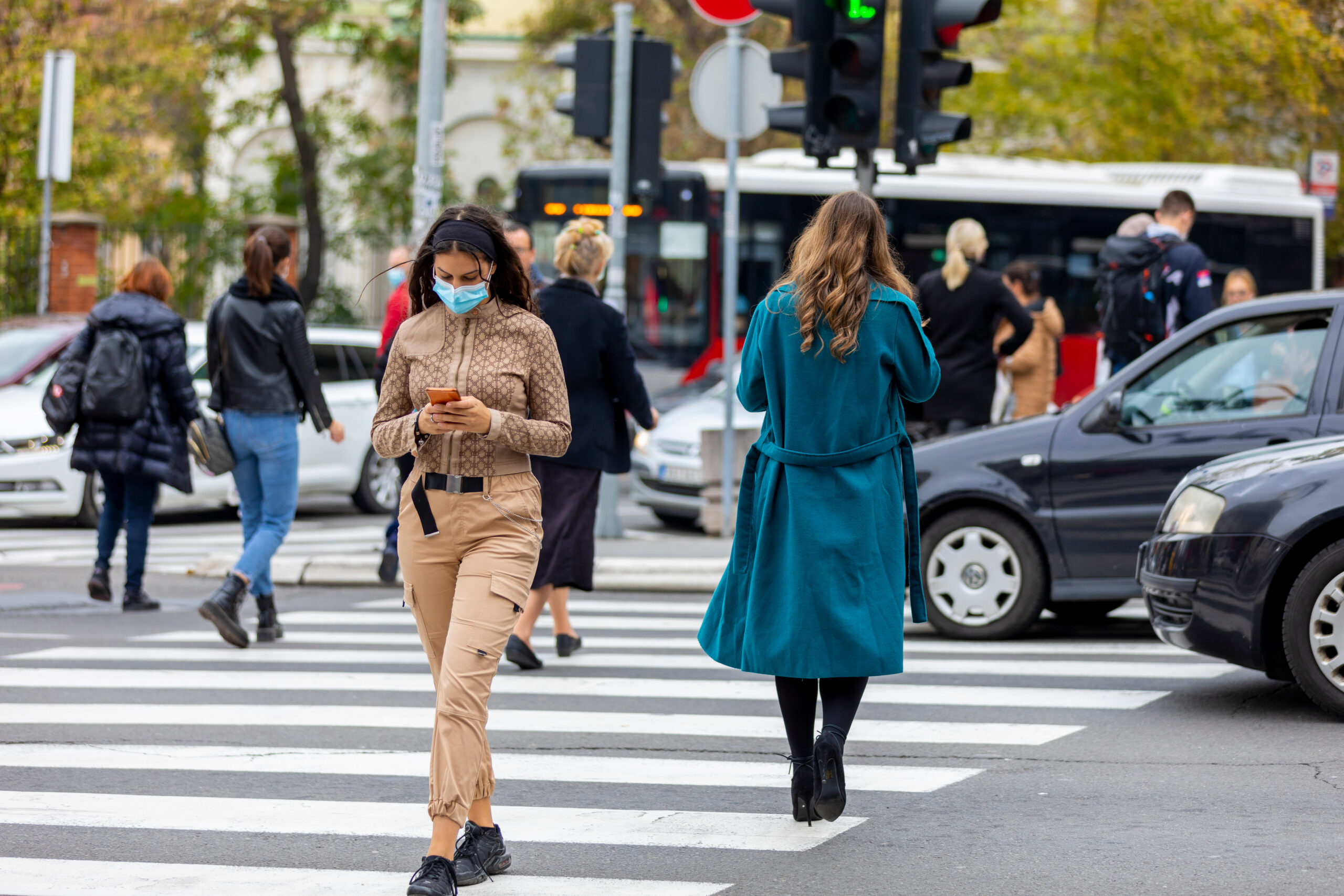
If you've been told the crash was your fault, you're not alone, and it's not necessarily true. Several factors push initial blame onto the pedestrian, even when the driver bears most or all of the responsibility:
- Pedestrians often can't tell their side of the story. In a serious or fatal crash, the pedestrian may be unconscious, hospitalized, or killed, while the driver is typically uninjured and able to give a statement to police at the scene. The initial police report is often built almost entirely from the driver's account.
- "Looked but didn't see" gets treated as an excuse. Drivers frequently say they never saw the pedestrian before impact, and investigators often take that at face value instead of asking whether the driver was distracted, speeding, or not looking carefully enough. Georgia law (O.C.G.A. § 40-6-93) puts the duty of due care on the driver, not the pedestrian, and that duty doesn't relax for a child, a confused pedestrian, or someone impaired.
- Crosswalk right-of-way gets reversed. Under O.C.G.A. § 40-6-91, a driver must stop and remain stopped for a pedestrian in a crosswalk on their half of the roadway. A crosswalk collision is sometimes treated as automatically ambiguous rather than starting from that statutory duty.
- Jaywalking gets overstated. Crossing outside a crosswalk can factor into a comparative negligence argument under O.C.G.A. § 40-6-92, but it isn't a criminal offense in Georgia and doesn't erase the driver's duty of care.
- Special-status pedestrians get overlooked. Georgia law requires drivers to yield to a blind pedestrian at all times (§ 40-6-94), and sets separate rules for pedestrians without an available sidewalk (§ 40-6-96). These specifics are often missed in a first-pass claims review.
- There's a financial incentive to shift blame. Under Georgia's comparative negligence rule (more below), every percentage point of fault assigned to you is a percentage point that doesn't get paid out. Dark clothing, phone use, and location are common go-to arguments, regardless of how much they actually contributed to the crash.
The police report and an adjuster's first take on fault are not the final word. An experienced pedestrian accident attorney can investigate independently, gather witness accounts and footage before they disappear, and hold the analysis to what Georgia's statutes actually say.
Don't let someone else's version of events stand unchallenged. Contact Hagen Rosskopf for a free consultation, or call 404-522-7553.
Results We've Obtained for Injured Pedestrians
Numbers alone don't tell a client's whole story, but they show what's possible when a pedestrian accident claim is fully investigated and pursued. Here are results Hagen Rosskopf has obtained specifically in pedestrian accident cases:
| Result | Case Summary |
|---|---|
| $2.5M | Walton County verdict for a pedestrian struck while crossing, shattering his leg and causing a mild traumatic brain injury. He returned to his job as a police officer within a year. |
| $425K | Multiple policy-limits settlement for a pedestrian who was hit and run over by a vehicle while using a crosswalk; the victim was hospitalized for a week. |
| $300K | Settlement for a Decatur High School student hit while using a crosswalk just steps from school. The police report initially blamed the student before further investigation shifted liability to the driver. |
| $150K | Uninsured motorist settlement for a pedestrian struck in a crosswalk by a driver making a left turn; the at-fault driver had no valid auto insurance, so the claim was pursued through the victim's own UM coverage. |
Full details on these and other cases are available on our case results page. Whether your case involves a traumatic brain injury, a spinal cord injury, or another catastrophic injury, our catastrophic injury lawyers and wrongful death attorneys have experience pursuing full compensation on behalf of pedestrian accident victims and their families.
Why Should I Hire a Lawyer for a Pedestrian Accident in Atlanta?
There are several reasons to get legal representation after being hit as a pedestrian in Georgia, especially if you or a loved one is the victim. Here are three:
- Someone builds your case for you. An experienced advocate will determine fault, investigate the evidence, and present the facts clearly and persuasively, rather than letting the insurance company's initial assumptions stand. An experienced personal injury attorney will look for video evidence from businesses or traffic cams, bodycam footage from the responding police officers, and retain crash reconstruction experts if needed.
- You have representation if it goes to trial. When negotiations fail, your case may need to go to court. Make sure you are working with a law firm that has trial experience and with trial lawyers that are preparing for litigation from Day 1. Comfort in the courtroom and a deep understanding of the litigation process can make the difference in your outcome.
- You can focus on healing instead of paperwork. Pedestrian accidents frequently cause serious injury. If you're unable to focus on legal matters while you recover, your legal team can advocate for your rights in the meantime. The peace of mind for you and your loved ones is worth every penny and every legal fee freeing you to focus all your energy into your medical care and healing from your injuries.
Our Decatur-based team handles the calls with insurance companies, the paperwork, and the challenge of collecting medical bills and records, so you can focus on your health and recovery.
If you've been involved in a pedestrian accident, reach out right away. Contact us today, and let us help you pursue the recovery you deserve.
What If I Was Partly at Fault for the Accident?
Insurance companies routinely try to pin some or all of the blame for a pedestrian accident on the pedestrian. Under Georgia's modified comparative negligence law, O.C.G.A. § 51-12-33, that doesn't necessarily end your claim.
Georgia lets you recover damages as long as you're found less than 50 percent at fault. Your compensation is reduced by your percentage of responsibility. For example, if a jury finds you 20 percent at fault for a $100,000 claim, you'd still recover $80,000. If you're found 50 percent or more at fault, however, you recover nothing. This is often called Georgia's "50 percent bar rule," and it makes fault determination one of the most contested parts of any pedestrian accident claim. Insurance adjusters know this and will look for any argument, however thin, that pushes your share of fault toward that threshold. An attorney's job is to make sure that argument doesn't succeed on weak evidence.
How Long Do I Have to File a Pedestrian Accident Claim in Georgia?
Under Georgia's personal injury statute of limitations, O.C.G.A. § 9-3-33, most pedestrian accident lawsuits must be filed within two years of the date of the accident. Wrongful death claims are also generally subject to a two-year deadline. Missing this window can permanently bar your right to recover compensation, regardless of how strong your case is, so it's worth talking to a Georgia personal injury lawyer well before that deadline approaches. Evidence, witness memories, and camera footage also degrade quickly, so earlier is always better than later.
What Compensation Can I Recover?
Pedestrian accident victims in Georgia may be entitled to three types of damages, depending on the facts of the case:
- Economic damages cover your actual financial losses: medical bills, future medical care, lost wages, and lost earning capacity if your injuries affect your ability to work going forward.
- Non-economic damages compensate for losses that don't come with a receipt: pain and suffering, emotional distress, and loss of enjoyment of life.
- Punitive damages are reserved for cases involving especially reckless conduct, such as a drunk or highly reckless driver. These exist to punish the driver, not to compensate you.
Not every case qualifies for all three, and a Georgia pedestrian accident lawyer can evaluate which apply to your situation and help you get the best settlement possible.
Georgia Laws Protecting the Rights of Pedestrians
Georgia's pedestrian laws are set out in Title 40, Chapter 6, Article 5 of the Official Code of Georgia (O.C.G.A. §§ 40-6-90 through 40-6-99):
| O.C.G.A § 40-6-90 | Pedestrians must obey traffic signals and pedestrian control signals. |
| O.C.G.A § 40-6-91 | Drivers must stop and remain stopped for a pedestrian in a crosswalk on their half of the road. Pedestrians may not suddenly leave a curb into a vehicle's path with no time to stop. |
| O.C.G.A § 40-6-92 | A pedestrian crossing outside a crosswalk must yield to traffic already on the roadway. |
| O.C.G.A § 40-6-93 | Drivers must exercise due care to avoid hitting any pedestrian; this duty doesn't relax for a child, a confused pedestrian, or someone impaired. |
| O.C.G.A § 40-6-94 | Drivers must yield to a blind pedestrian at all times, regardless of location. |
| O.C.G.A § 40-6-95 | A pedestrian who is intoxicated to the point of being a hazard may not walk on a roadway or shoulder. |
| O.C.G.A § 40-6-96 | Where a sidewalk is available, pedestrians must generally use it rather than the roadway. |
Jaywalking is not a defined criminal offense in Georgia, and it doesn't erase a driver's duty of care under O.C.G.A § 40-6-93.
Who is Most at Risk on Georgia's Roads?
Nationally, pedestrian deaths have been rising for over a decade. In 2022, 7,522 pedestrians were killed in traffic crashes, the highest number in 41 years, and U.S. pedestrian death rates rose 50 percent between 2013 and 2022 even as most other high-income countries saw declines over the same period. On average, a pedestrian is killed roughly every 70 minutes on U.S. roads. Some groups face disproportionate risk, and often need an attorney experienced with their specific circumstances:
- Elderly pedestrians are more likely to suffer catastrophic injuries in a collision, including spinal cord injuries and wrongful death, due to age-related fragility and, in some cases, dementia or Alzheimer's-related confusion in traffic. Families evaluating a wrongful death claim should have age-related vulnerability weighed into the severity of the outcome.
- Pedestrians with disabilities, including wheelchair users and those with PTSD or other mental health conditions, face added risk from Atlanta's uneven sidewalk infrastructure and crosswalk timing. Whether inadequate infrastructure contributed to the crash, alongside driver negligence, is often worth investigating in these cases.
- Children are especially vulnerable near schools and in residential areas; 17 percent of children under 15 killed in U.S. traffic crashes in recent years were pedestrians. When a driver fails to obey reduced school-zone speed limits or crossing guard instructions, parents may have grounds for a child injury claim.
- Public transit riders, including those walking to or from a MARTA bus stop or train station, are frequently struck by inattentive drivers at nearby crosswalks. Whether the driver had a clear duty to yield is often the central question in these claims.
Improving traffic infrastructure in Georgia, particularly in areas like Atlanta, to protect the most vulnerable road users isn't just a safety measure, it's a matter of basic equity.
Georgia Pedestrian Accident Statistics
The national numbers above tell part of the story, but Georgia has its own data worth knowing. According to the Governor's Office of Highway Safety's preliminary 2023 Georgia Traffic Safety Facts report, 319 pedestrians were killed on Georgia roads in 2023, down 8 percent from 345 in 2022, and another 564 pedestrians suffered serious injuries. Pedestrians accounted for roughly 19 percent of all Georgia traffic fatalities in 2023, even though they represent a much smaller share of road users overall. Fulton and DeKalb County, which include Atlanta and Decatur, consistently report the highest crash volumes of any counties in the state, reflecting the density of pedestrian traffic in and around the metro area.
Where Do Pedestrian Accidents Happen in Atlanta?
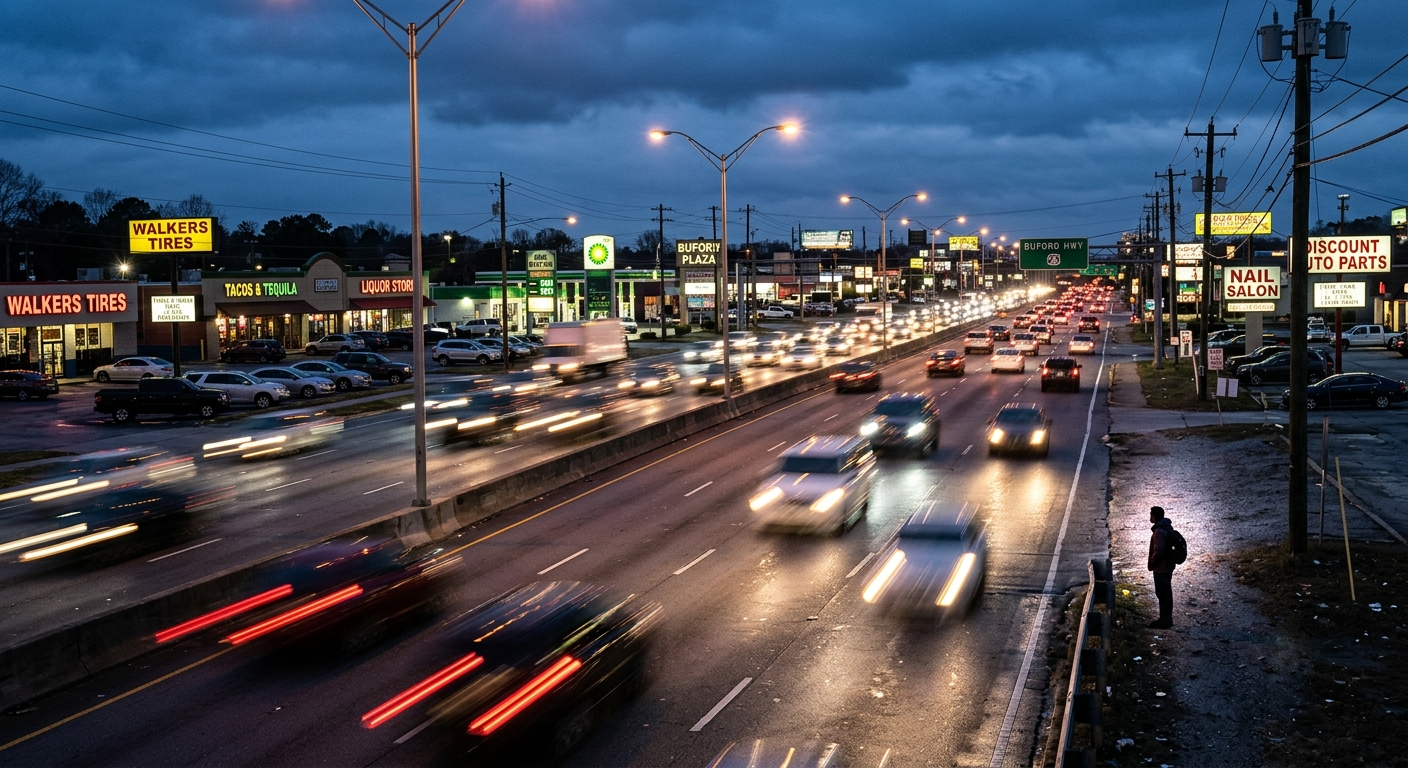
Certain corridors and situations account for a disproportionate share of local pedestrian crashes: busy intersections along Peachtree Street and Martin Luther King Jr. Drive, the Downtown Connector area, Cascade Ave, among many other roads and intersections in high risk corridors. Other hot spots are parking lots at shopping centers and grocery stores where drivers backing out fail to see pedestrians, and school zones. Knowing where and how these accidents tend to happen doesn't just inform advocacy, it also helps establish patterns of driver negligence when building a claim.
Resources for Injured Pedestrians and Their Families
Recovering from a pedestrian accident, or grieving the loss of a loved one, involves more than a legal claim. These organizations offer support beyond what our firm provides:
- Atlanta Families for Safe Streets is a survivor- and family-led community for people who have been injured, or who have lost a loved one, in a traffic crash. This support group offers peer connection with others who understand what you're going through. Learn more at atlantafss.org or through Propel ATL.
- The Georgia Crime Victims Compensation Program, administered by the Criminal Justice Coordinating Council, can help cover medical bills, lost income, funeral expenses, and mental health counseling for victims of hit-and-run accidents, DUI crashes, and other vehicle crimes, up to program limits. An application generally must be filed within a set window after the incident, so it's worth looking into early. More information is available at cjcc.georgia.gov.
- Propel ATL advocates for safer streets and sidewalks across the city and can be a resource both for reporting hazards and for connecting with the broader pedestrian safety community.
If you or a family member is struggling emotionally after a crash, a licensed counselor or your primary care provider can help you find appropriate mental health support. In a crisis, the 988 Suicide & Crisis Lifeline is available by call or text, 24/7.
How You Can Help Make Georgia a Safer Place to Walk
- Report hazards. If you know of broken sidewalks, malfunctioning walk signals, or other problems in Atlanta or your local area, report them at 311 Atlanta via phone or through their social media handles, and describe the problem and its location.
- Get involved locally. Attend public meetings, join advisory committees, or contact your elected officials in Georgia and in your county. They need to hear that residents want safer sidewalks and street crossings.
- Share what you know. Pass along educational resources and remind drivers around you to slow down and watch for pedestrians.
- Support pedestrian advocacy. Donate or volunteer with Propel ATL, a local advocacy group with an outsized impact.
Bruce Hagen is a passionate advocate for safer streets in Atlanta and for the rights of the most vulnerable road users. Learn more about his advocacy work on our blog or by following Hagen Rosskopf on social media.
$2.5M
Walton County verdict where the victim was struck while a pedestrian shattering his leg and causing a mild traumatic brain injury. The victim returned to his job as a police officer within one year of the crash.
$425K
Multiple policy limits settlement for a pedestrian who was hit and ran over by a vehicle while using a crosswalk. The victim was hospitalized for a week.
$300K
Settlement for a high school student who was hit while attempting to cross the street using a crosswalk. The victim was just a few steps away from arriving to his school safely and instead of attending school was transported by ambulance to an emergency room.
$150K
Uninsured motorist coverage settlement for pedestrian who was crossing the street on a crosswalk when a driver took a left turn and crashed into the victim. The at fault driver was operating a vehicle without valid auto-insurance.
Thank you to All of our Clients
At Hagen Rosskopf, our greatest honor is helping our clients rebuild their lives after unexpected tragedy strikes.